【本文原载于联合国教科文组织公众号2025年9月24日推文】
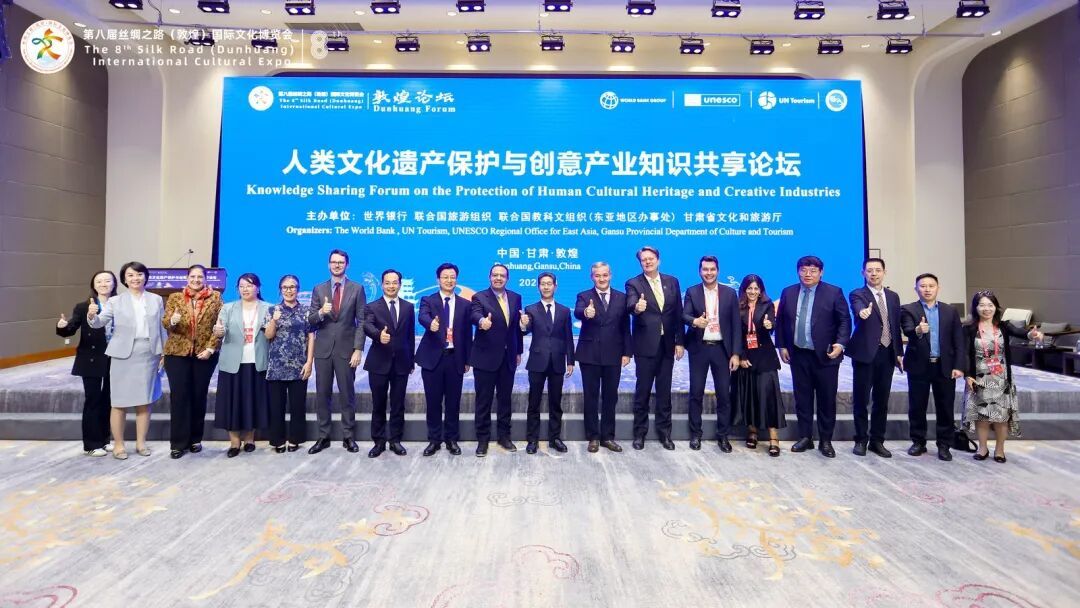
2025年9月22日,作为第八届丝绸之路(敦煌)国际文化博览会的重要分论坛之一的"人类文化遗产保护与创意产业全球知识共享论坛"在敦煌国际会展中心成功举办。本次论坛汇聚了来自多个国家的高级政府官员、国际专家、学者及文化领域从业者,共同探讨文化遗产与创意在塑造可持续、包容性未来的关键作用。
该论坛由联合国教科文组织东亚地区办事处、联合国旅游组织、世界银行与甘肃省文化和旅游厅合作举办,旨在搭建一个跨学科、跨区域的对话平台。与会各方重点探讨了非物质文化遗产如何成为国际合作的催化剂,旅游业为何必须从注重数量转向提升质量,以及创意产业如何成为激发文化活力、推动经济发展的引擎。
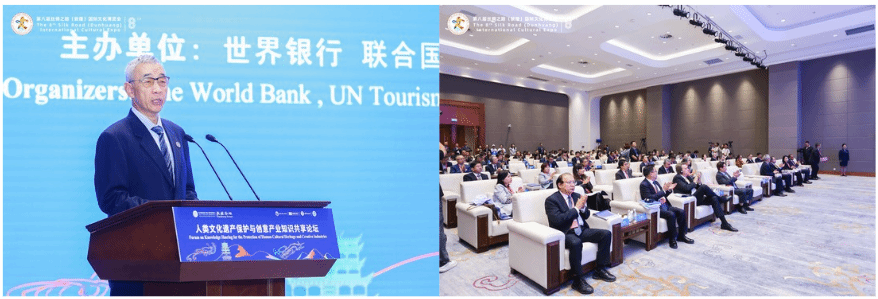
联合国教科文组织副总干事曲星致开幕词 © 第八届丝绸之路(敦煌)国际文化博览会
论坛开幕式上,与会嘉宾强调保护遗产不仅关乎保存历史,更关乎促进不同文明间的相互理解与对话。各个机构的重要代表包括联合国教科文组织副总干事曲星,均指出非物质文化遗产——从传统音乐、传统仪式到手工艺和口头传统——不仅赋予社群认同感与归属感,也为这个日益互联的世界开辟了全球对话的路径。
论坛共设十余场专题,逾四十位来自学界、政府、文化机构及私营部门的嘉宾深入探讨:探讨文化遗产与创意产业如何相辅相成, 社区主导的保护项目如何在守正的同时又能提振地方经济;文化资源叠加创新怎样驱动可持续增长;与会专家还呼吁关注旅游业转型的重要性,即从单纯追求游客数量,转向注重为游客提供高品质体验,以期为社区带来长期红利。
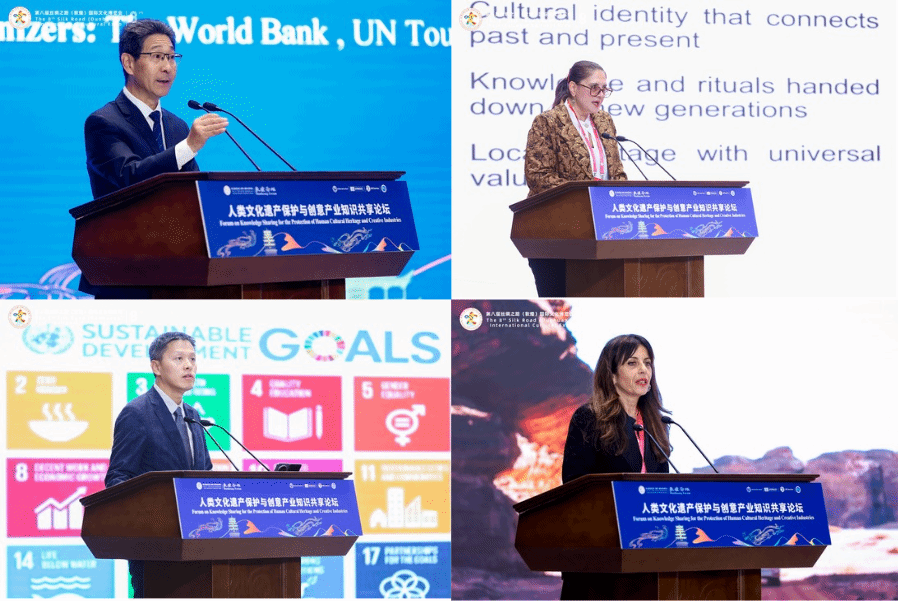

与会专家发言 © 第八届丝绸之路(敦煌)国际文化博览会
与会专家重申,国际合作依然至关重要。来自亚洲、欧洲、中东等国家的专家分享了多个案例,展示跨国交流与协同可有效应对全球化背景下活态遗产保护的挑战,并通过过文化赋能为青年创造新的创业机会。
圆桌讨论环节中,专家们以鲜活案例呈现非物质文化遗产如何架起文化之桥:从传统工艺的活化,到本土遗产与创意产品、旅游服务的深度融合,嘉宾们一致认为,文化既能激发创新,也能在尊重多样性的同时加强国际联系。

圆桌讨论 © 第八届丝绸之路(敦煌)国际文化博览会
作为“甘肃丝绸之路经济带文化传承与创新项目(GRIP)”的重要组成部分,论坛现场发布三项知识成果:《利用文化和创造力促进可持续发展:甘肃文化创意产业政策建议指南》《甘肃旅游人力资源发展战略》及《世行贷款甘肃丝绸之路经济带文化传承与创新项目:甘肃省国际营销战略》,为甘肃进一步盘活文化遗产与创意资源、夯实可持续旅游并带动经济社会全面发展提供实操路径。

知识成果发布 © 第八届丝绸之路(敦煌)国际文化博览会
在丝绸之路历史名城、文化重镇敦煌,论坛向全球传递明确信号:文化遗产保护与创意产业战略发展这两个目标彼此赋能, 相得益彰;二者协同发展,必将催生创新活力,滋养可持续旅游,并深化文明间的对话互鉴。


甘肃省非遗文创展示 © 第八届丝绸之路(敦煌)国际文化博览会
Knowledge Exchange at Dunhuang Forum Underscores the Role of Heritage and Creativity in Sustainable Development
Dunhuang, 22 September 2025 – The Forum on Global Knowledge Sharing for the Protection of Human Cultural Heritage and Creative Industries, held on 22 September as part of the 8th Silk Road (Dunhuang) International Cultural Expo, brought together senior officials, international experts, academics, and cultural stakeholders to reflect on the role of heritage and creativity in shaping a sustainable and inclusive future.
Organized in collaboration with UNESCO Regional Office for East Asia, UN Tourism, the World Bank, and Gansu Provincial Department of Culture and Tourism, the Forum served as a platform for dialogue across disciplines and regions. It highlighted how intangible cultural heritage can be a catalyst for international cooperation, how tourism must focus on quality rather than quantity, and how creative industries can become engines for cultural vitality and economic development.
From the opening session, speakers emphasized that safeguarding heritage is not only about preserving the past but also about fostering mutual understanding and dialogue among civilizations. Distinguished representatives from the partners’ organizations, including UNESCO Deputy Director-General Qu Xing, underlined that intangible cultural heritage – from traditional music and rituals to crafts and oral traditions – provides communities with a sense of identity and belonging while offering pathways for global dialogue in an increasingly interconnected world.
Throughout the over 10 sessions, more than 40 speakers from academia, government, cultural institutions, and the private sector exchanged perspectives on how cultural heritage and creative industries can work hand in hand. Discussions explored how community-led safeguarding initiatives not only protect traditions but also strengthen local economies, and how cultural resources, when combined with innovation, can drive sustainable growth. The Forum also drew attention to the importance of shifting the focus of tourism from mere visitor numbers to quality experiences that generate long-term benefits for communities.
Experts also underlined that international cooperation remains essential. Experiences shared from across Asia, Europe, and the Middle East demonstrated how exchange and collaboration can help address common challenges, from safeguarding living heritage in the face of globalization to creating opportunities for youth through culture-based entrepreneurship.
Roundtables provided vivid examples of how intangible cultural heritage is serving as a bridge across cultures. From the safeguarding of traditional crafts to the integration of local heritage into creative products and tourism services, participants highlighted how culture can inspire creativity, foster respect for diversity, and strengthen international ties.
As part of the Gansu Revitalization and Innovation Project (GRIP), the Forum introduced new knowledge products: Leveraging Culture and Creativity for Sustainable Development: Policy Guideline for Gansu’s Cultural and Creative Industries, Gansu Silk Road Economic Belt Cultural Inheritance and Innovation Program (World Bank Loan): Gansu Tourism Human Capital Strategy, and Gansu Silk Road Economic Belt Cultural Inheritance and Innovation Program (World Bank Loan): Gansu International Marketing Strategy. These resources are designed to consolidate progress in leveraging cultural heritage and creativity, offering practical pathways to strengthen sustainable tourism as well as broader economic and social development.
By bringing together diverse stakeholders in Dunhuang – a historic Silk Road city with a rich cultural legacy – the Forum underscored that the safeguarding of cultural heritage and the strategic development of creative industries are mutually reinforcing objectives. Together they can catalyse innovation, foster sustainable tourism, and strengthen intercultural dialogue.

