2026年2月8日至15日,由北京大学与印度尼西亚布拉维贾亚大学联合发起的“Global Youth Creative Residency Program”全球青年创意驻留计划(印尼工作营站)在印尼玛琅市顺利开展。本次活动由北京大学艺术学院访问学者、西安建筑科技大学助理教授李敏,北京大学文化产业研究院学术研究部主任、北京大学艺术学院博士后张亚欧带队,来自北京大学、浙江外国语学院、西安建筑科技大学及印尼布拉维贾亚大学的50余名师生,以沉浸式体验、实地调研、方案设计与成果展示为核心,深入印尼乡村挖掘文化与产业资源,用青年创意为当地乡村文化创新与可持续发展建言献策,在跨文化交流中书写乡创实践的青春答卷。
玛琅作为新晋“世界媒体与艺术之都”,拥有深厚的乡村文化底蕴与丰富的特色产业资源,为本次驻留计划的创意实践提供了优质载体,师生团队以青年为桥梁、以创意为纽带,在跨文化协作中探索艺术设计赋能乡村可持续发展的全新路径。
From February 8 to 15, 2026, the Global Youth Creative Residency Program (Indonesia Workshop Session) , co-initiated by Peking University and the University of Brawijaya in Indonesia, was successfully held in Malang, Indonesia. Led by Li Min, Visiting Scholar at the School of Arts of Peking University and Assistant Professor at Xi'an University of Architecture and Technology, and Zhang Ya'ou, Director of Academic Research Office at the Institute for Cultural Industries and Postdoctoral Fellow at the School of Arts of Peking University, the program gathered more than 50 teachers and students from Peking University, Zhejiang International Studies University, Xi'an University of Architecture and Technology and the University of Brawijaya. Centering on immersive experience, field research, scheme design and achievement presentation, the participants delved into rural Indonesia to explore cultural and industrial resources, offered insightful suggestions for the local rural cultural innovation and sustainable development with youthful creativity, and wrote a splendid youth chapter of rural creative practice through cross-cultural exchanges.
As a newly designated City of Media Arts of the world, Malang boasts a profound rural cultural heritage and abundant characteristic industrial resources, providing an excellent carrier for the creative practice of this residency program. With young people as the bridge and creativity as the link, the teacher-student team explored a brand-new path for empowering rural sustainable development through art and design in cross-cultural collaboration.

工作营开篇,师生们走进玛琅当地知名蜡染工作室,沉浸式体验这项列入联合国教科文组织人类非物质文化遗产代表作名录的传统技艺。在当地工匠的耐心指导下,大家亲手将加热融化的蜂蜡勾勒于木板,以苏木、靛蓝等天然植物染料为白布上色,在一勾一画、一浸一染中,感受印尼蜡染“精准点蜡构建完整叙事”的工艺精髓,体会每一款纹样背后承载的印尼民族对自然的敬畏与信仰表达。
At the launch of the workshop, teachers and students visited a renowned batik studio in Malang for an immersive experience of this traditional craft, which is inscribed on the UNESCO Representative List of the Intangible Cultural Heritage of Humanity. Under the patient guidance of local artisans, they personally traced patterns on wooden boards with heated and melted beeswax, and dyed white cloth with natural plant-based colorants such as sappanwood and indigo. In every stroke of the wax pen and every dip in the dye, they felt the essence of Indonesian batik craftsmanship—"crafting complete narratives through precise wax dotting"—and understood the reverence for nature and expressions of belief of the Indonesian nation embodied in each pattern.
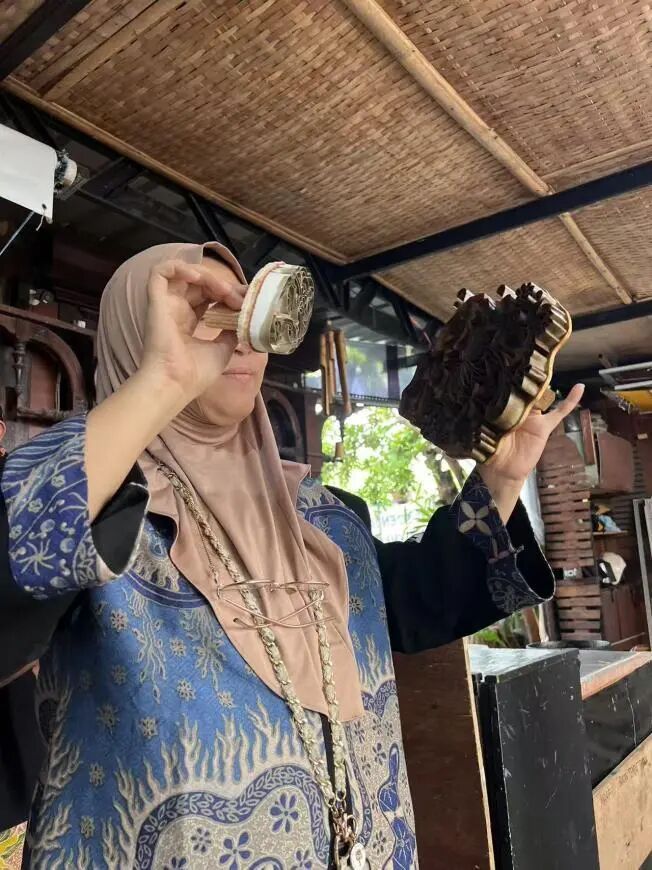 Yang Nadia Miranti老师展示蜡染工具 |  北大师生制作蜡染 |  同学们的蜡染作品 |
从2月10日起,工作营各小组深入玛琅当地村庄开启沉浸式实地调研,聚焦乡村特色产业、传统手工艺、公共空间等核心领域,与当地村民、匠人、养殖户深度交流,挖掘乡村发展的本土资源与核心需求。
在Jipang米糖工作坊,师生们系统学习传统甜点的制作全流程,探究其饮食文化内涵,同时发现本土特色农产品包装简陋、品牌辨识度低的发展痛点;走进咖啡豆种植工坊,大家实地考察咖啡果生长、加工全链条,了解当地咖啡产业的发展现状与优势;在Blangkon帽子传统制作体验中,匠人现场演示面料甄选、裁剪缝纫等精湛工艺,师生们亲手参与制作,深入理解这项爪哇传统头饰的文化寓意与传承价值。
Starting from February 10, each group of the workshop went deep into the local villages in Malang to launch immersive field research. Focusing on core areas such as rural characteristic industries, traditional handicrafts and public spaces, they conducted in-depth exchanges with local villagers, craftsmen and farmers, and explored the indigenous resources and core development needs of the rural areas.
At the Jipang rice candy workshop, teachers and students systematically learned the entire production process of this traditional dessert and explored its culinary and cultural connotations, while identifying the development pain points of local characteristic agricultural products, such as shoddy packaging and low brand recognition. During the visit to the coffee bean planting workshop, they conducted on-site inspections of the entire chain of coffee fruit growth and processing, and gained an in-depth understanding of the current development status and advantages of the local coffee industry. At the experiential session of traditional Blangkon hat making, local craftsmen demonstrated exquisite techniques such as fabric selection, cutting and sewing on site. Teachers and students took part in the making by hand, thus developing a profound understanding of the cultural implications and inheritance value of this traditional Javanese headdress.
 同学们在Jipang米糖工作坊 |  同学们参加Blangkon帽子传统制作体验
|
此外,团队还调研了当地鲶鱼养殖业、传统面具Topeng Malangan艺术、乌布尔雷乔瀑布景区及卡维村公共空间等,品尝印尼传统美食、体验粽叶编织技艺,在全方位感受印尼乡村文化与产业风貌的同时,细致收集一手调研素材,为后续的创意设计方案找准方向、夯实基础。晚间,师生们还体验了Gamelan乐器演奏、观摩了“Gebyak”集体展演,进一步加深对当地社区文化日常传承方式的理解。
In addition, the team also conducted research on the local catfish farming industry, the traditional Topeng Malangan mask art, the Sumber Umbulan Waterfall Scenic Area, and the public spaces of Kawi Village, among other subjects. They tasted traditional Indonesian delicacies and experienced rice leaf weaving techniques, fully immersing themselves in the cultural and industrial features of rural Indonesia while carefully collecting first-hand research data—laying a solid foundation and clarifying the direction for subsequent creative design plans. In the evening, the teachers and students also tried playing Gamelan instruments and watched the collective performance of "Gebyak", which deepened their understanding of the daily inheritance methods of the local community culture.
 体验印尼节庆传统编织 |  品尝印尼传统美食 |
本次活动由布拉维贾亚大学讲师杨·纳迪亚·米兰蒂(Yang Nadia Miranti)担任项目主理人,北京大学张亚欧、李敏、张黎歆,浙江外国语学院周向力、王朴之、吴清月、王雪逸,以及布拉维贾亚大学多位教师共同担任创意导师指导7组团队。
基于实地调研成果,各工作营小组围绕乡村特色产业升级、公共空间品质提升、非遗文化活化利用三大方向细化方案、落地实践,并于 2 月 13 日完成成果集中展示,七组提案各展所长,以兼具创新性与落地性的设计成果,交出跨文化乡创实践答卷。
Yang Nadia Miranti, a lecturer at the University of Brawijaya, served as the project manager for this program. Zhang Ya'ou, Li Min and Zhang Lixin from Peking University, Zhou Xiangli, Wang Puzhi, Wu Qingyue and Wang Xueyi from Zhejiang International Studies University, together with several teachers from the University of Brawijaya, acted as creative mentors to guide the seven teams.
Based on the achievements of field research, each workshop team refined proposals and carried out practical implementation centering on three core directions: the upgrading of rural characteristic industries, the improvement of public space quality, and the vitalization and utilization of intangible cultural heritage. A centralized achievement presentation was held on February 13, where each of the seven proposals showcased its unique strengths. With innovative and implementable design outcomes, the teams handed in an excellent answer sheet for cross-cultural rural creative practice.
Jipang 米糖组:完善产品配料表、清真认证等包装文本,设计礼盒包装与宣传页,打造双语品牌标识,规划线上销售路径,推动传统手作产品规范化、品牌化。
Jipang Rice Candy Team: Refined packaging texts including ingredient lists and halal certification, designed gift box packaging and promotional leaflets, created bilingual brand logos, and mapped out online sales channels to drive the standardization and branding of traditional handcrafted products.

Jipang组产品包装设计图
卡维村咖啡组:设计文创产品与品牌视觉体系,制作创意短视频,实现产业价值与人文内涵有机融合。
Kawi Village Coffee Team: Designed cultural and creative products and a brand visual system, produced creative short videos, and achieved an organic integration of industrial value and humanistic connotations.
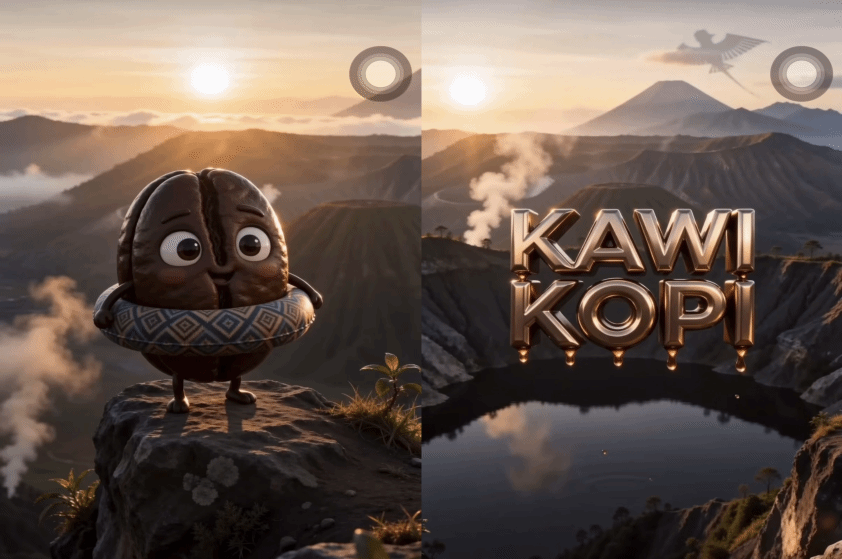
Kawi coffee组产创意短视频制作
鲶鱼养殖组:提出 “养殖 + 研学 + 文旅” 融合思路,设计鱼塘科普标识、规划主题市集,优化生态养殖模式,探索产业延伸增收新路径。
Catfish Farming Team: Proposed an integrated development approach of "Aquaculture + Research & Study + Cultural Tourism", designed popular science signs for fish ponds, planned themed markets, optimized the ecological aquaculture model, and explored new paths for industrial extension and income growth.

卡维村公共空间组:踏勘王宫周边区域,完成保安亭主题墙绘创作,优化村庄导览图并补充村民口述故事素材,打造全新乡村视觉形象。
Kawi Village Public Space Team: Surveyed the areas around the royal palace, created thematic murals for security booths, optimized the village guide map with supplementary oral story materials from villagers, and built a brand-new visual identity for the village.

乌布尔雷乔瀑布景区泳池改造组:设计景区人物 IP“Luma(爱宝)”,将 IP 元素融入道路导视、景观节点与宣传物料,强化景区形象识别度。
Sumber Umbulan Waterfall Scenic Area Pool Renovation Team: Designed the scenic area's character IP "Luma", integrated IP elements into road signage, landscape nodes and promotional materials, and enhanced the visual recognition of the scenic area’s image.

Luma(爱宝)设计
Blangkon 传统头饰组:梳理技艺历史背景与地域风格,完善品牌故事与佩戴养护说明,构想分级定价与研学体验课程,让传统服饰适配现代生活语境。
Blangkon Traditional Headdress Team: Combed through the historical background and regional styles of the craft, refined the brand story and wearing & maintenance instructions, conceived tiered pricing and research-based experience courses, and adapted this traditional costume to the context of modern life.

Blangkon小组明信片设计
Topeng Malangan 面具艺术组:创作面具主题墙绘,设计融入多语种二维码语音讲解的互动式文化地图,让非遗文化融入日常公共空间,实现创意转化与对外传播。
Topeng Malangan Mask Art Team: Created mask-themed murals and designed an interactive cultural map integrated with multilingual QR code audio explanations, integrating the intangible cultural heritage into daily public spaces to achieve creative transformation and international communication.

各组汇报亮点纷呈,现场交流氛围热烈,所提方案兼具创新性与落地性,得到了现场指导教师与观摩人员的积极反馈。这不仅是数日来乡创实践的成果凝练,更是中印尼青年学子以专业知识赋能乡村发展的责任担当体现。
此次全球青年创意驻留计划(印尼工作营站)的开展,是中印尼高校在乡村创意与可持续发展领域的深度协作,两国师生躬身乡野、深耕实践,在跨文化交流中深化了两国的文化理解与青年友谊,更探索出创意赋能乡村可持续发展的跨文化协作新模式。未来,北京大学文化产业研究院将持续深化与印尼布拉维贾亚大学等机构的合作,推动本次工作营成果的落地运营,让青春创意真正扎根乡土,同时持续搭建中外乡创交流的桥梁,让青年力量在乡村振兴的跨文化实践中持续绽放,以高校引领、青年参与的模式,为乡村文化创新与可持续发展贡献更多青春智慧与实践方案。
Each team’s presentation featured distinct highlights with a lively atmosphere of on-site exchange. The proposed plans, which combined innovation with feasibility, received positive feedback from the on-site instructors and observers. This is not only a condensation of the achievements from several days of rural creative practice, but also a reflection of the sense of responsibility of young students from China and Indonesia in empowering rural development with their professional knowledge.
The launch of this Global Youth Creative Residency Program (Indonesia Workshop Session) marks an in-depth collaboration between Chinese and Indonesian universities in the field of rural creativity and sustainable development. Teachers and students from both countries went deep into rural areas and committed themselves to practical exploration, which not only deepened cultural understanding and youth friendship between the two nations through cross-cultural exchanges, but also explored a new cross-cultural cooperation model for empowering rural sustainable development with creativity. Going forward, the Institute for Cultural Industries of Peking University will continue to deepen cooperation with the University of Brawijaya and other Indonesian institutions, promote the implementation and operation of the achievements of this workshop, and ensure that youthful creativity truly takes root in rural lands. Meanwhile, we will keep building a bridge for cross-border rural creative exchanges, let the power of youth shine continuously in the cross-cultural practice of rural revitalization, and contribute more youthful wisdom and practical solutions to rural cultural innovation and sustainable development through a model led by universities and participated in by young people.
供稿:胡芮 尹柳清 李若侨 孙小哲
编辑:陈文琪
审核:张亚欧 李敏

